
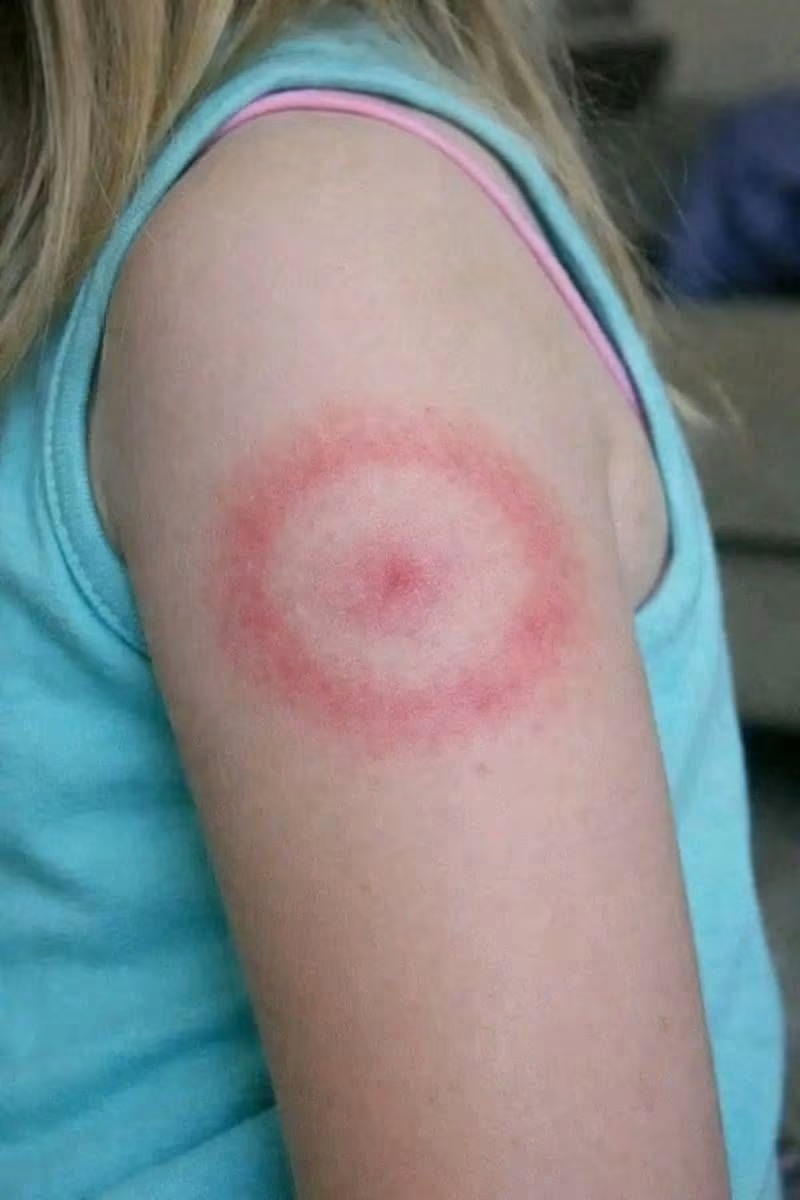
My daughter woke up with a strange red ring on her arm. It is not itchy, but it looks like it is spreading. I am panicking. Do I need to rush her to the emergency room?
As a parent, noticing anything unusual on your child’s skin can immediately trigger a spike of adrenaline. Seeing a red ring or circular rash on your child’s arm may send your mind racing toward worst-case scenarios, leaving you staring at your phone, wondering whether you should grab the car keys and head straight to the emergency room.
Take a deep breath. You are not alone in this panic, and you are doing exactly what a good parent does: paying attention.
Fortunately, most ring-shaped rashes in children are not emergencies. While some conditions deserve prompt medical attention, many have simple explanations and respond beautifully to treatment. Understanding the possible causes can help you stay calm, observe the rash effectively, and make informed decisions about your child’s health.
Let us walk through what that red ring might be, what to look for, and exactly when you need to seek help.
First, Take a Breath: How Worried Should You Be
It is completely normal to feel anxious when something unexpected appears on your child’s skin. However, in the vast majority of cases, a red ring rash can safely be evaluated by your pediatrician during normal office hours. You do not need to rush to the emergency room unless specific warning signs are present.
The Watch and Wait Checklist
Pay close attention to the following details over the next twenty-four hours. Is the rash expanding, and how fast? Are there changes in color, or is the center clearing out? Does it become painful, warm to the touch, or intensely itchy? Is your child developing a fever, fatigue, or body aches? Are additional spots appearing elsewhere on the body?
A helpful tip for parents: Take a photo of the rash right now. Use a pen to lightly draw a circle around the border of the redness on your child’s skin. Take another photo in twelve hours. This photo diary is incredibly valuable for your pediatrician to see exactly how fast the rash is moving.
The Bullseye: Understanding Lyme Disease
One of the most well-known ring-shaped rashes is the Lyme disease rash, known medically as erythema migrans. The detail you mentioned, that the rash is spreading but not itchy, is a classic hallmark of this specific rash.
It usually begins as a small red area at the site of a tick bite and gradually expands over several days. As it grows outward, the center may clear up and appear lighter, creating the classic bullseye or target-like appearance.
Characteristics of a Lyme Rash
Look for gradual expansion over days, often growing larger than two inches or five centimeters. The rash is usually not painful and not very itchy, though it can be in some cases. The skin may feel warm to the touch. Consider the context: recent exposure to wooded areas, tall grass, camping trips, or known tick bites.
Note: Not every child with Lyme disease develops a bullseye rash, and not every bullseye rash means Lyme disease. However, if your child has this rash and has been outdoors recently, call your pediatrician promptly. Lyme disease is highly treatable with a simple course of antibiotics if caught early.
Other Common Culprits: The Not-So-Scary List
If it does not look like Lyme disease, what else could it be? Several very common, highly treatable conditions cause ring-shaped rashes in children.
Ringworm, Also Called Tinea Corporis
Despite the scary name, ringworm is not caused by a worm. It is a very common, superficial fungal infection. It appears as a red, scaly circle with a raised, active border and a clearer center. Unlike Lyme disease, ringworm is usually very itchy and has a scaly, flaky texture. It is easily treated with over-the-counter or prescription antifungal creams.
Pityriasis Rosea
This is a harmless, common skin condition that often starts with a single, larger patch known as a herald patch, which can look like a ring, followed by a scattering of smaller spots on the torso. It appears as a large oval or ring-like patch, often with a collarette of scale just inside the border. It is completely harmless, often follows a mild viral illness, and usually resolves on its own within six to eight weeks.
Contact Dermatitis
Did your child lean against a new plant, wear a new bracelet, or rest their arm on a freshly cleaned counter? Soaps, plants like poison ivy, which can sometimes form linear or circular blisters, detergents, or new clothing materials can irritate sensitive skin and create unusual, localized rashes.
Red Flags: When to Seek Emergency Care
Although most ring rashes are not dangerous, some symptoms indicate a systemic emergency. Seek emergency medical care immediately if your child develops the rash alongside any of the following warning signs.
Difficulty breathing, wheezing, or shortness of breath. Swelling of the lips, tongue, face, or throat. A sudden, very high fever. Severe, unmanageable pain. A rash that is spreading rapidly or looks like dark purple bruises. Confusion, extreme lethargy, or unusual behavior. Severe headache, light sensitivity, or a stiff neck, which can be signs of meningitis.
If any of these are present, do not wait for a pediatrician appointment. Go to the nearest emergency room or call emergency services.
When to Call the Pediatrician
If your child is acting completely normal, playing, eating, and smiling, but you just have that spreading red ring, call your pediatrician’s office. They will likely want to see your child to rule out Lyme disease or prescribe a cream for ringworm.
Call the doctor if the rash continues to expand noticeably, if it persists for several days without improvement, if your child develops a fever, fatigue, or body aches, if the rash becomes painful, swollen, or starts oozing, or if your child recently spent time in tick-prone areas, even if you did not see a tick.
What to Tell the Receptionist
When you call, try to provide these details so they can triage you correctly. Note when the rash first appeared. Estimate its size, for example, it is about the size of a silver dollar. Mention whether it is itchy or painful, for example, she says it does not bother her at all. Share any recent outdoor activities, for example, we were hiking in the woods on Saturday. Note any other symptoms, for example, she has a low-grade fever today.