
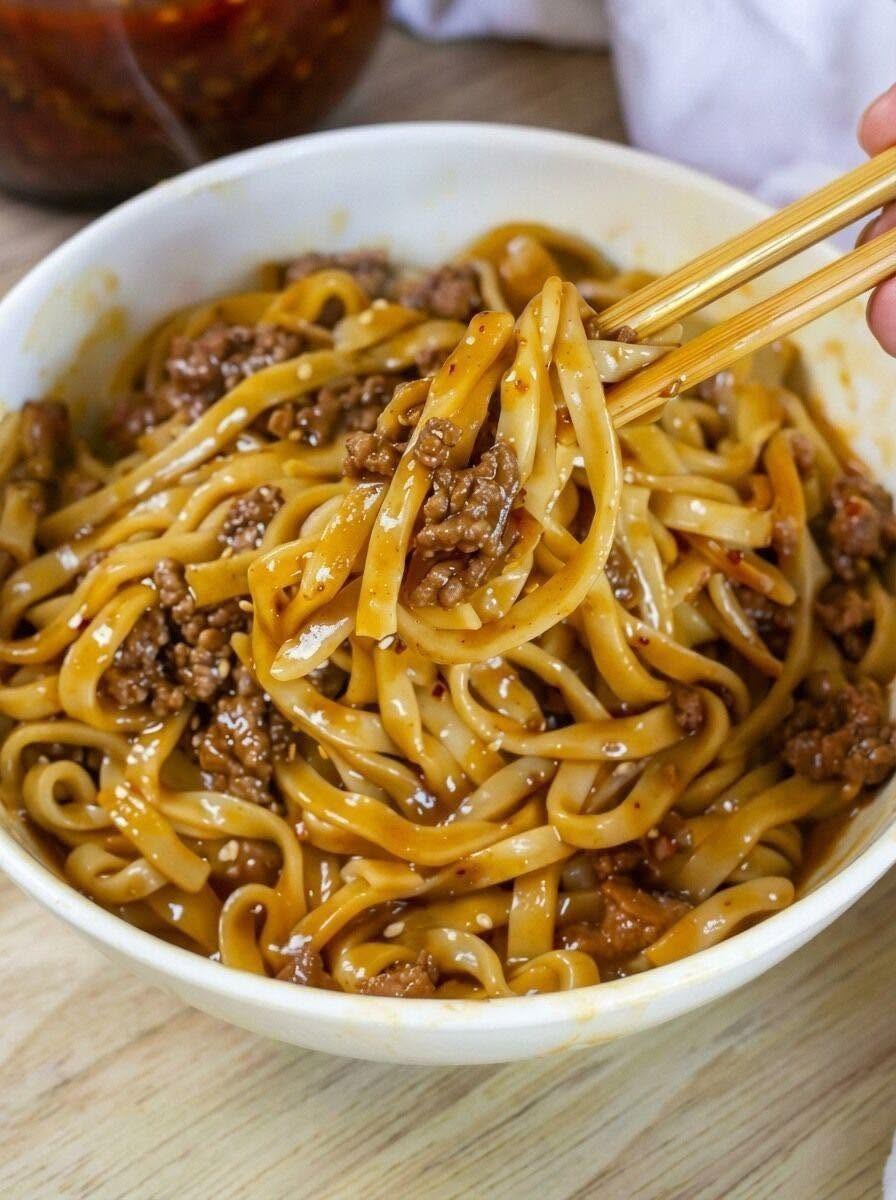
Engaging Introduction
A quick, savory‑sweet noodle dish with perfectly browned ground beef and a glossy, flavorful sauce.
That’s the promise of Mongolian Ground Beef Noodles—and it delivers every single time.
I discovered this recipe on a Tuesday. You know the kind of Tuesday I’m talking about. The one where you’ve worked late, the kids are hungry, and the drive-thru is calling your name like a siren song. I was one click away from ordering pizza when I remembered a pack of ground beef in the fridge and a box of noodles in the pantry.
I didn’t have time for a slow-simmered Mongolian beef. I didn’t have the energy for a complicated stir-fry. But I had 20 minutes and a craving for something savory, sweet, and deeply satisfying.
I found a recipe online. The comments were glowing. “Better than takeout.” “My kids asked for seconds.” “This is in our weekly rotation now.”
I was skeptical. But I was also hungry.
I browned the beef. I whisked together the sauce (soy sauce, brown sugar, garlic, ginger). I boiled the noodles. I tossed everything together.
Fifteen minutes later, I was eating a bowl of glossy, savory-sweet noodles with tender ground beef that tasted like it had simmered for hours. My kids asked for seconds. My husband asked for the recipe.
Now it’s in our weekly rotation.
Let me show you why.
Why You’ll Love These Mongolian Ground Beef Noodles
- 20 minutes start to finish – Faster than delivery.
- One pan (plus a pot for noodles) – Minimal cleanup.
- Pantry-friendly ingredients – Soy sauce, brown sugar, garlic, ginger—you probably have everything.
- Budget-friendly – Ground beef is cheaper than steak or flank steak (traditional Mongolian beef).
- Kid-approved – Sweet, savory, and not too spicy.
- Better than takeout – Seriously. You’ll never order Mongolian beef again.
Ingredients – Simple, Savory, Sweet
or the Mongolian Ground Beef & Sauce:
- 1 lb (450g) ground beef (80/20 or 85/15 – not too lean)
- 3 cloves garlic, minced
- 1 tablespoon fresh ginger, grated (or ½ teaspoon ground ginger)
- ½ cup low-sodium soy sauce (or tamari for gluten-free)
- ½ cup water
- ⅓ cup brown sugar, packed (light or dark)
- 1 tablespoon cornstarch (for thickening)
- 2 tablespoons vegetable oil (for cooking)
- ¼ teaspoon red pepper flakes (optional, for heat)
For the Noodles:
- 8 oz (225g) lo mein noodles, ramen noodles, or spaghetti
- 2 green onions, sliced (for garnish)
- Sesame seeds (for garnish)
Optional Add-Ins:
- 1 cup shredded carrots (adds color and sweetness)
- 1 cup snap peas or broccoli florets (adds crunch)
- ¼ teaspoon sesame oil (adds nutty depth)
Substitutions & Swaps:
- No ground beef? Use ground pork, ground turkey, or ground chicken.
- No soy sauce? Use tamari (gluten-free) or coconut aminos (slightly sweeter).
- No brown sugar? Use coconut sugar (less sweet, deeper flavor) or honey (reduce water slightly).
- No fresh ginger? Use ½ teaspoon ground ginger.
- Gluten-free: Use tamari and gluten-free noodles (rice noodles, soba, or gluten-free spaghetti).
- Vegetarian: Use crumbled tempeh or plant-based ground “meat.”
Step-by-Step – From Pantry to Plate in 20 Minutes
Step 1: Start the Noodles
Bring a large pot of salted water to a boil. Cook the noodles according to package directions. Drain and set aside.
Pro tip: Don’t overcook the noodles. They’ll cook slightly more when tossed with the hot sauce.
Step 2: Make the Sauce
In a small bowl, whisk together the soy sauce, water, brown sugar, cornstarch, and red pepper flakes (if using). Set aside.
Pro tip: Whisk until the cornstarch is fully dissolved (no lumps)
Step 3: Brown the Ground Beef
Heat a large skillet or wok over medium-high heat. Add the vegetable oil. Add the ground beef.
Cook, breaking it up with a spatula, until browned and cooked through (5-6 minutes). Drain excess fat if needed.
Step 4: Add Garlic and Ginger
Add the minced garlic and grated ginger to the skillet. Cook for 30-60 seconds, until fragrant.
Step 5: Add the Sauce
Pour the sauce into the skillet. Stir to combine. Bring to a simmer. Cook for 1-2 minutes, until the sauce thickens into a glossy glaze.
Pro tip: The sauce will thicken quickly. Stir constantly to prevent burning.
Step 6: Combine with Noodles
Add the cooked noodles to the skillet. Toss to coat evenly. If the sauce is too thick, add a splash of water (or reserved pasta water) to loosen.
Step 7: Garnish and Serve
Transfer to a serving bowl or platter. Garnish with sliced green onions and sesame seeds. Serve immediately.
My Best Tips for Mongolian Ground Beef Success
- Use low-sodium soy sauce. Regular soy sauce can make the dish overwhelmingly salty. Low-sodium gives you control.
- Don’t skip the cornstarch. It’s what gives the sauce that glossy, clingy texture. No cornstarch = watery sauce.
- Grate the ginger, don’t chop it. Grated ginger melts into the sauce, releasing more flavor. Chopped ginger leaves hard bits.
- Use a large skillet or wok. You need space to toss the noodles without them falling out.
- Taste and adjust. Want it sweeter? Add more brown sugar. Want it saltier? Add a splash of soy sauce. Want it spicier? Add more red pepper flakes.
- Make it a meal. Add shredded carrots, snap peas, or broccoli for color, crunch, and nutrition.
Fun Variations (Once You’ve Mastered the Original)
Spicy Mongolian Ground Beef Noodles – Double the red pepper flakes. Add 1 tablespoon sriracha or gochujang (Korean chili paste) to the sauce.
Garlic Lover’s Mongolian Noodles – Double the garlic (6 cloves). Add ¼ teaspoon garlic powder to the sauce.
Peanut Mongolian Noodles – Add 2 tablespoons peanut butter to the sauce. Garnish with crushed peanuts.
Vegetable-Packed Mongolian Noodles – Add 1 cup shredded carrots, 1 cup snap peas, and 1 cup broccoli florets to the skillet (cook for 2-3 minutes before adding the sauce).
Honey Ginger Mongolian Noodles – Replace brown sugar with ¼ cup honey. Add 1 tablespoon rice vinegar for tang.
Coconut Aminos Version – Use coconut aminos instead of soy sauce (sweeter, lower sodium). Reduce brown sugar to ¼ cup.
What to Serve with Mongolian Ground Beef Noodles
This dish is a complete meal on its own, but here are some simple sides.
- Cucumber salad – Thinly sliced cucumbers with rice vinegar, sesame oil, and a pinch of sugar.
- Edamame – Steamed and sprinkled with sea salt.
- Egg rolls or spring rolls – Frozen or homemade.
- Pickled vegetables – Carrots, daikon, or cabbage.
- Steamed dumplings – Pork, chicken, or vegetable.