
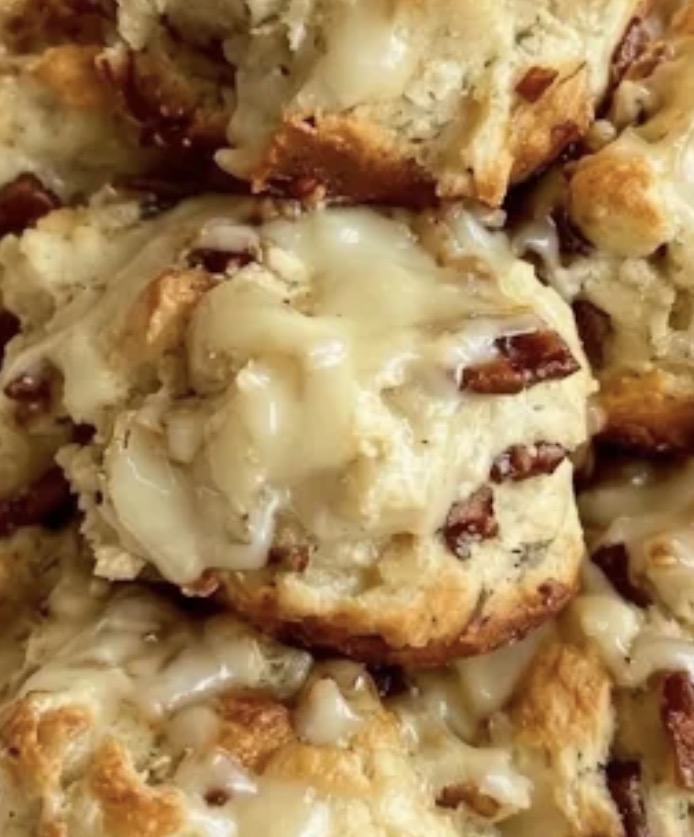
Let me tell you about the first time I tasted a German Rocks cookie.
I was visiting a friend in Frankenmuth, Michigan—a charming Bavarian-themed town known for its Christmas celebrations. She handed me a cookie that looked rugged and unpolished, nothing like the perfect round cookies you see in bakeries. One bite, and I was hooked. It was chewy, nutty, and warmly spiced, with a texture that was somehow both hearty and tender.
“What is this?” I asked.
“German Rocks,” she said. “They’re a Midwestern tradition.”
What Are German Rocks?
German Rocks (sometimes called “German Rock Cookies” or “Date Nut Rocks”) are a traditional cookie that likely traces back to German immigrants who settled in the American Midwest . They’re dense, drop-style cookies packed with chopped dates, walnuts, and warm spices like cinnamon and cloves .
The name “rocks” refers to their rugged, craggy appearance—not their texture . Inside, they’re tender, chewy, and deeply satisfying. Think of them as the rustic cousin of a date-filled cookie—less fussy, more forgiving, and perfect for sharing .
One of the most beloved versions comes from the Bavarian Inn in Frankenmuth, Michigan, where these cookies have become a signature treat . They’ve been a family favorite for generations, often baked during the holidays and enjoyed with coffee or tea .
Why These Cookies Deserve a Spot in Your Kitchen
There’s a reason these old-fashioned cookies have stood the test of time.
Rich, spiced flavor – The combination of cinnamon, cloves, dates, and nuts creates a warm depth that’s perfect for fall and winter baking .
Perfect texture – Dense, chewy, and satisfying—never dry or hard .
Sturdy and portable – These cookies store beautifully and are perfect for mailing, gifting, or packing in lunchboxes .
Long-lasting – They stay fresh for weeks in an airtight container and actually improve after a day or two as the flavors meld .
Forgiving dough – Easy to work with and hard to mess up .
The Story Behind the Name
The name “German Rocks” comes from their rugged appearance—they look like small, craggy rocks rather than smooth, uniform cookies . Despite the name, they’re not a traditional German cookie in the sense of a European pastry. Instead, they’re deeply rooted in German-American baking tradition .
These are the kind of cookies your great-aunt might have baked in a farmhouse kitchen on a rainy afternoon—simple, sturdy, buttery, and built to last . They’re what German immigrants baked when ingredients were scarce and love was abundant .
Ingredients You’ll Need
The beauty of German Rocks lies in their simplicity. Each ingredient plays a role in building the cookie’s signature texture and flavor.
For the Cookies:
- 1½ cups granulated sugar
- ½ cup unsalted butter, softened
- 3 large eggs
- 1 teaspoon vanilla extract
- 2½ cups all-purpose flour
- 1½ teaspoons ground cinnamon
- 1 teaspoon baking soda
- 1 teaspoon hot water
- 2½ cups chopped walnuts
- 2 cups pitted dates, chopped
Optional: Powdered sugar for dusting (traditional, but not necessary) .
How to Make German Rocks (Step-by-Step)
Step 1: Preheat and Prep
Preheat your oven to 350°F (175°C). Line baking sheets with parchment paper .
Step 2: Cream Butter and Sugar
In a large mixing bowl, beat the butter and sugar until smooth and creamy—about 2-3 minutes .
Step 3: Add Eggs and Vanilla
Beat in the eggs one at a time, then add the vanilla. Continue mixing until the mixture is light, fluffy, and well combined .
Step 4: Dissolve the Baking Soda
In a small bowl, mix the baking soda with hot water until fully dissolved. Add this mixture to the butter and sugar batter and mix well . This little trick helps the cookies rise nicely and develop a tender crumb.
Step 5: Add the Dry Ingredients
Add the flour and cinnamon, stirring gently until the dough is just combined. Be careful not to overmix—you want the dough to hold together without becoming tough .
Step 6: Fold in Nuts and Dates
Gently fold in the chopped walnuts and dates, distributing them evenly throughout the dough .
Step 7: Scoop and Bake
Scoop 2-3 tablespoon portions of dough onto ungreased baking sheets, spacing them about 2 inches apart . Bake for 12-14 minutes, or until the edges just begin to turn lightly golden brown .
Step 8: Cool and Store
Let the cookies cool on the baking sheet for a few minutes, then transfer to a wire rack to cool completely . Store in an airtight container at room temperature .
Expert Tips for Perfect German Rocks
Use fresh dates. Fresh, moist dates make all the difference. If your dates are dry, soak them in warm water for 10 minutes, then drain and pat dry before chopping .
Don’t overbake. These cookies are meant to be chewy. They’re done when edges are just set and lightly golden .
Toast your nuts. Toasting walnuts before adding brings out their flavor. Spread on a baking sheet and toast at 350°F for 5-7 minutes .
Store properly. These cookies improve after a day or two as flavors meld .
Chill the dough if needed. If the dough is too soft, chilling it briefly can prevent excessive spreading .
Variations to Make Them Your Own
Chocolate Chip Version: Add ½ cup chocolate chips for a richer flavor .
Nut-Free: Simply omit the walnuts—the texture will still be chewy and delicious .
Orange Zest Twist: Add 1 teaspoon of orange zest to the batter for a subtle citrus aroma .
Holiday Spice Mix: Enhance the festive flavor by adding ¼ teaspoon nutmeg and ¼ teaspoon allspice .
Coconut Addition: Mix in ½ cup shredded coconut for extra texture and sweetness .
How to Store and Freeze
Room Temperature: Store in an airtight container for up to 5 days at room temperature .
Refrigerator: They can be stored in the refrigerator for up to 10 days in a sealed container .
Freezer: Place cookies in a freezer-safe bag or container and freeze for up to 3 months .
To Refresh: Warm cookies in the microwave for about 8-10 seconds to restore their soft texture .
Frequently Asked Questions
Why are they called German Rocks? The name comes from their rough, rocky appearance after baking, which gives them a unique homemade look .
Are these cookies very sweet? They are moderately sweet, balanced by the spices and the natural sweetness of dates .
Can I use different nuts? Yes, you can substitute walnuts with pecans, almonds, or any preferred nut .
Do I have to cook the dates first? Some recipes simmer the dates to soften them and help create the cookie’s signature chewy texture .
Can I make the dough ahead of time? Yes, the dough can be refrigerated for up to 24 hours before baking .
Can I make them gluten-free? You can try using a gluten-free all-purpose flour blend designed for baking .
A Final Thought
What I love most about German Rocks is their honesty. They’re not trying to be fancy or complicated. They’re the kind of cookie that feels like it came straight from Grandma’s holiday tin—humble, comforting, and made with love .
If you’ve never tried them before, you’re in for a treat. And if you’re lucky enough to have a family recipe of your own, you already know exactly what I’m talking about.
Have you ever made German Rocks? Share your tips and stories in the comments—I’d love to hear how this recipe has been passed down in your family.